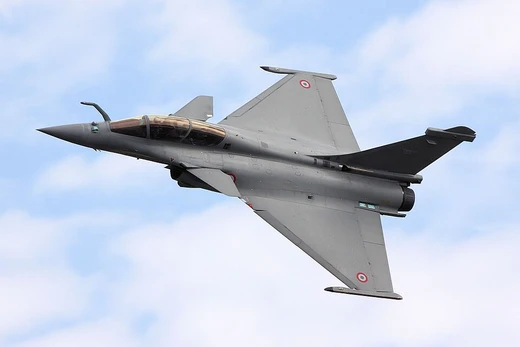
A-10 Thunderbolt II
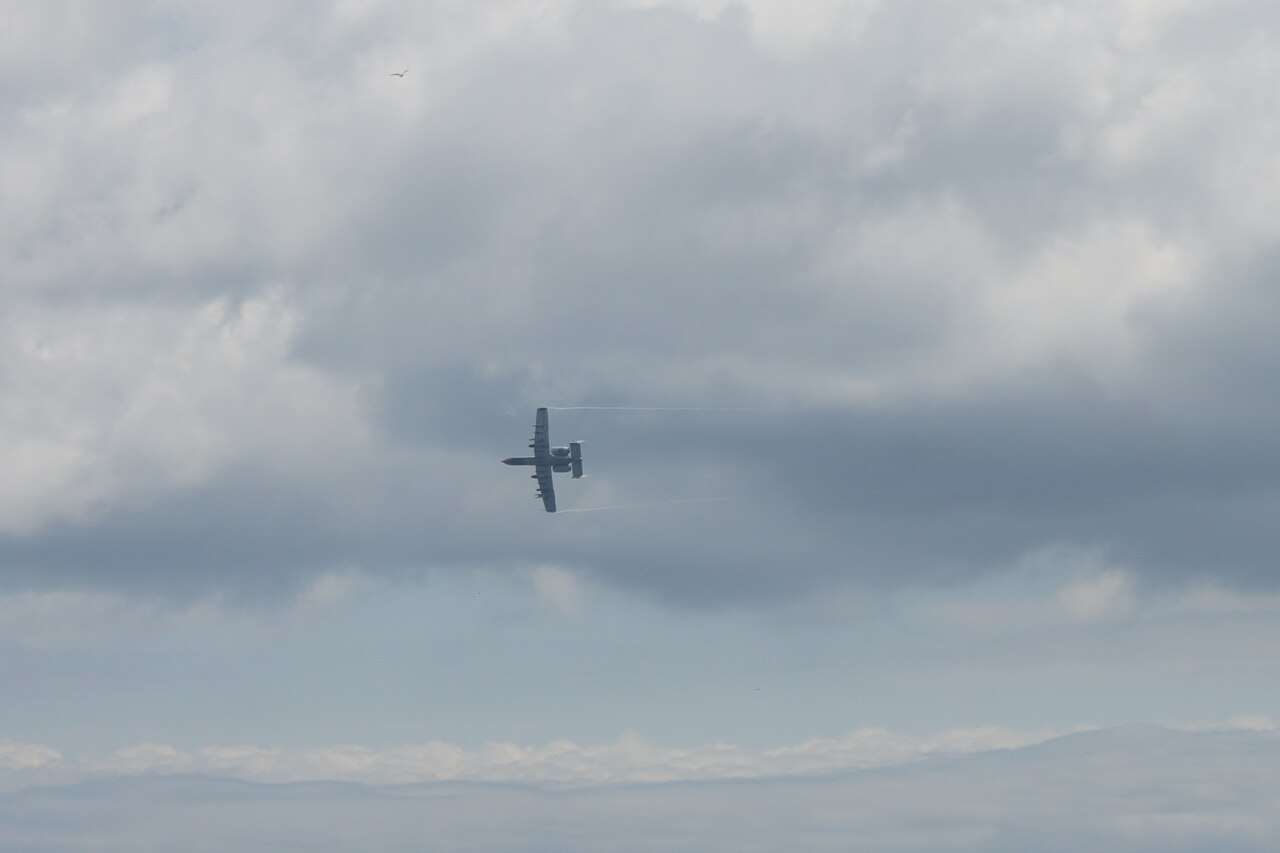
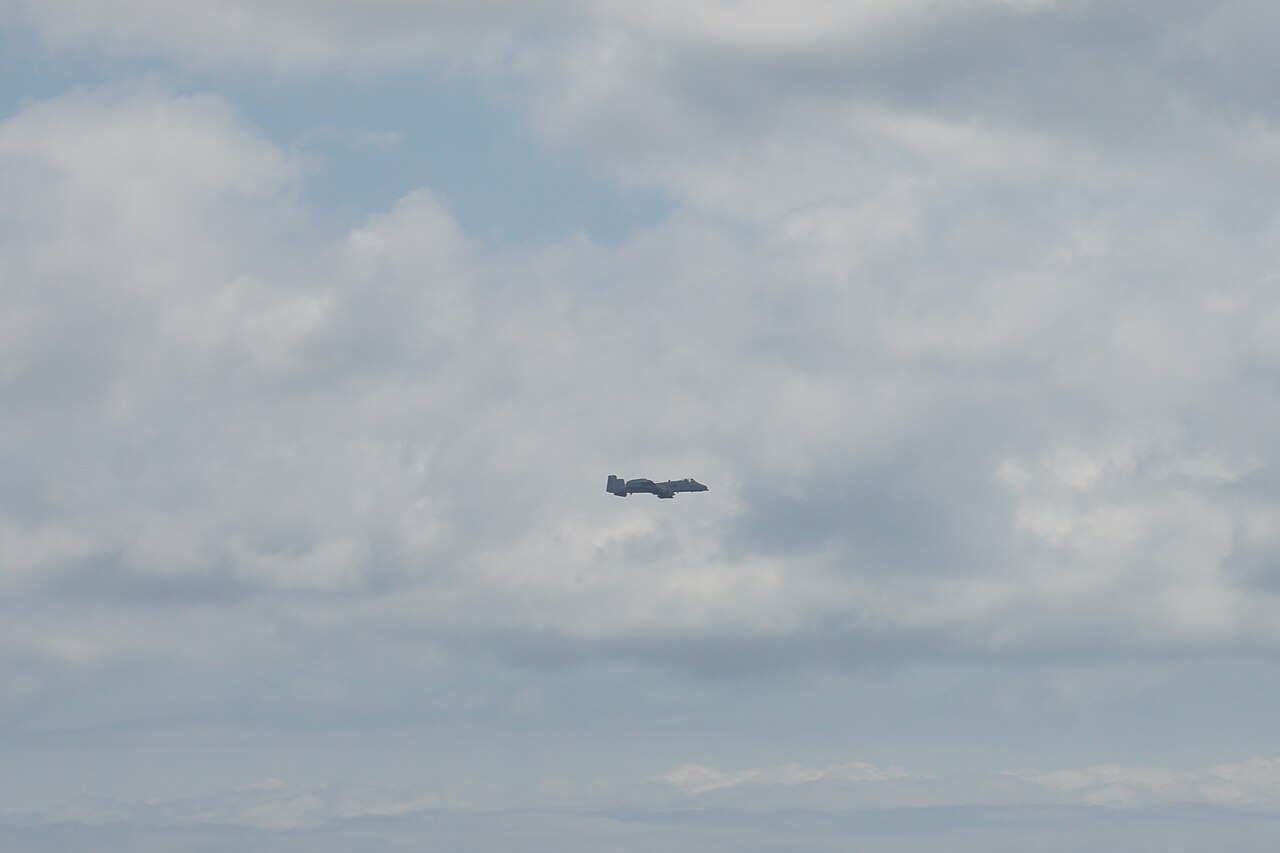
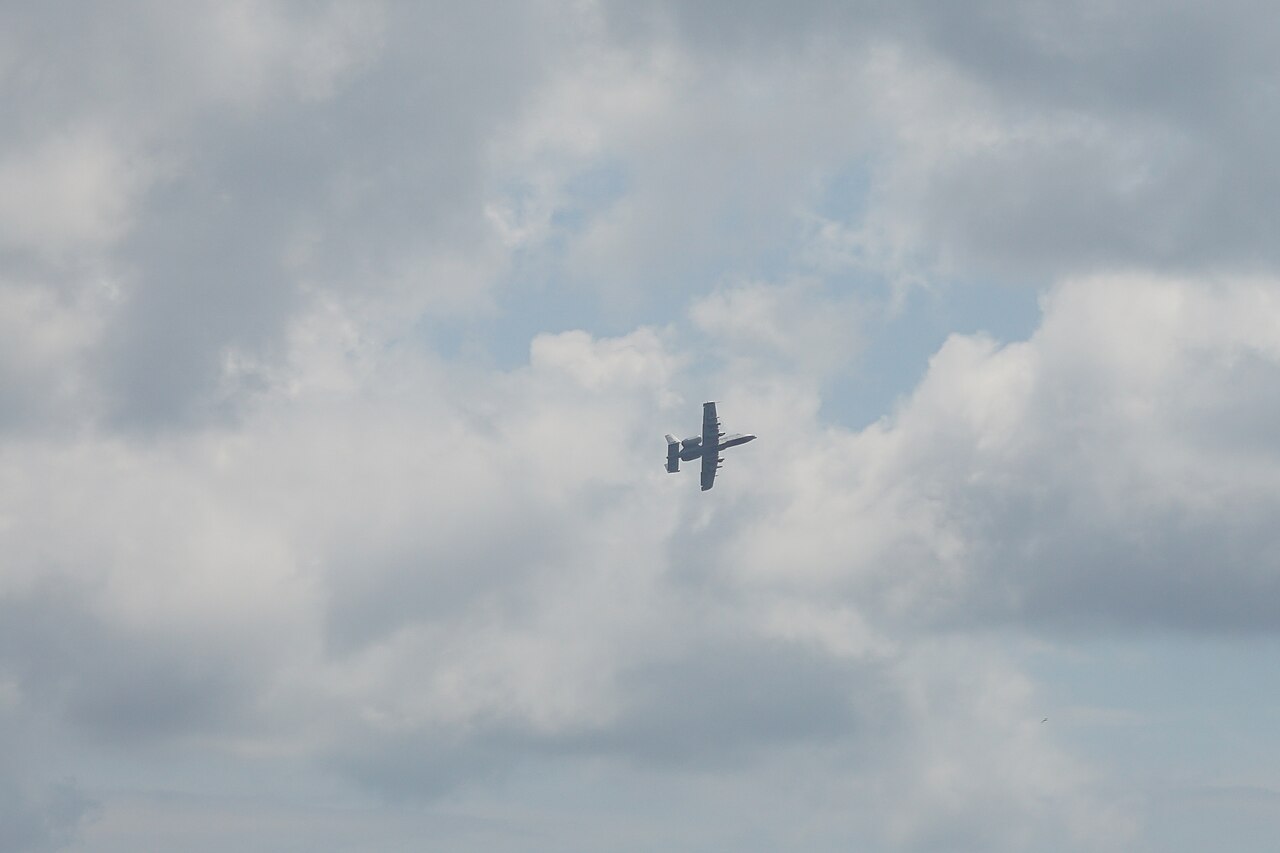
Dedicated close air support aircraft, known as the Warthog.

Michael Barera · CC BY-SA 4.0
The Fairchild Republic A-10 Thunderbolt II, widely known as the Warthog, is a single-seat, twin-turbofan, straight-wing, subsonic attack aircraft developed for the United States Air Force.
- Primary role
- Close air support (CAS)
- Manufacturer
- Fairchild Republic
- Operator
- United States Air Force
- Armament
- 30 mm GAU-8 Avenger rotary autocannon
- Nickname
- Warthog
Lore & Background
The airframe was designed around the high-power 30 mm GAU-8 Avenger rotary autocannon and built for durability, with 1,200 pounds of titanium armor protecting the cockpit and systems. Its ability to operate from short, unpaved runways and its simple design allowed maintenance with minimal facilities. Only the A-10A single-seat variant was produced, though one pre-production airframe was modified into the YA-10B twin-seat prototype for an all-weather night-capable version. Its secondary missions include combat search and rescue, forward air control (airborne), reconnaissance, air interdiction, and maritime surface warfare.
Reader's Guide
The A-10 Thunderbolt II holds a unique place in aviation history as the only production-built aircraft designed exclusively for close air support to serve with the U.S. Air Force. Its development was driven by the need for a durable, low-cost aircraft capable of attacking armored vehicles and supporting ground troops, filling a gap left by high-speed nuclear-delivery designs and the vulnerable A-1 Skyraider. The aircraft's design, centered on the powerful GAU-8 Avenger cannon and heavy titanium armor, made it exceptionally resilient in combat. Its ability to operate from short, unpaved airstrips near front lines enhanced its tactical flexibility. The A-10's service record spans decades and multiple major conflicts, demonstrating its enduring relevance. However, its replacement by the Lockheed Martin F-35 Lightning II remains contentious within the USAF and in political circles. This ongoing debate underscores the aircraft's valued role and the difficulty of replicating its specialized mission.
Did You Know?
- The A-10 is named after the Republic P-47 Thunderbolt strike-fighter of World War II.
- The airframe was designed around the high-power 30 mm GAU-8 Avenger rotary autocannon.
Design Philosophy & Built-In Survivability
The Warthog's airframe was conceived not as a generic platform to which weapons were later attached, but as a structure built outward from the 30 mm GAU-8 Avenger rotary autocannon. That design philosophy produced a straight-wing, subsonic, twin-turbofan aircraft whose singular purpose was to loiter over a battlefield and deliver devastating close air support against tanks, armored vehicles, and other ground forces. Durability was treated as a first-order requirement: the cockpit and critical aircraft systems are wrapped in roughly 1,200 pounds of titanium armor, giving the airframe a remarkable capacity to absorb battle damage and still return to base. The straight-wing configuration and relatively low operating speed enable takeoffs and landings from short, unpaved strips near the front lines, while the aircraft's straightforward mechanical design means it can be serviced with minimal ground facilities. These traits collectively made the A-10 the only production-built aircraft in U.S. Air Force history designed exclusively for the close air support mission.
The Gap in American Strike Aviation
By the time the Vietnam War demanded a dedicated strike aircraft, the USAF and Navy were still relying on the Korean War-era Douglas A-1 Skyraider. Though it offered a generous payload and long loiter time, its propeller-driven airframe was slow, vulnerable to small-arms fire, and short on modern firepower. The Northrop F-5 lacked the right mission profile, and the LTV A-7 Corsair II doubled in price once upgraded engines and avionics were mandated. These failures crystallized the need for a purpose-built, affordable, dedicated close air support aircraft.
Five Decades of Combat Employment
It flew in the Gulf War's Operation Desert Storm, saw action during the Yugoslav Wars, sustained operations in Afghanistan and Iraq, struck targets in the campaign against the Islamic State, and participated in Operation Odyssey Dawn over Libya. In each of these theaters the aircraft fulfilled its core close air support mission while also performing secondary roles such as combat search and rescue, forward air control (designated OA-10 when dedicated to that task), reconnaissance, air interdiction, and maritime surface warfare. The breadth of these assignments underscores how a single-seat, twin-turbofan, straight-wing platform can remain tactically indispensable well beyond its original design era.
Replacement Debate & Institutional Legacy
Although the A-10A single-seat variant was the only production version, one pre-production airframe was modified into the YA-10B twin-seat prototype to evaluate an all-weather, night-capable configuration. The type's future, however, has become one of the most contentious debates in American defense policy. The U.S. Air Force has long stated that the Lockheed Martin F-35 Lightning II would assume the A-10's close air support duties as the fifth-generation fighter entered service. Yet within the Air Force itself and in congressional circles, that assumption remains fiercely disputed. The condition attached to that pause is significant: the Air Force must first demonstrate that the A-10's close air support capabilities can genuinely be replaced before additional aircraft are withdrawn. This standoff highlights a deeper institutional question about whether a multirole stealth fighter can replicate the loiter time, armor, and gun-centric lethality that made the Warthog uniquely suited to supporting troops on the ground.
Common Misconceptions (Editorial)
Some believe the A-10 was named for its aggressive appearance, but it was actually named after the Republic P-47 Thunderbolt of World War II. Others think multiple production variants exist, but only the A-10A single-seat version was produced; the YA-10B was a single pre-production prototype.
Why It Matters (Editorial)
The A-10 Thunderbolt II endures because it was built around one purpose: protecting ground troops. Its titanium armor, devastating GAU-8 cannon, and ability to operate from rough airstrips make it uniquely survivable and effective in close air support, a mission that remains essential in modern warfare.
Gallery
Frequently Asked Questions
What is the A-10 Thunderbolt II?
It is a single-seat, twin-turbofan, straight-wing attack aircraft built by Fairchild Republic specifically for the United States Air Force. Its entire design philosophy centers on surviving enemy fire while delivering close air support to ground troops.
Why is the A-10 nicknamed 'Warthog'?
Pilots and ground crews gave it the name because its blunt, angular fuselage and low-slung profile evoke the snout and tusks of a warthog. The moniker stuck because the plane's rugged, no-frills look perfectly matches that stubborn, tough animal.
What makes the A-10 unique in the USAF fleet?
It is the only production-built aircraft in US Air Force service that was designed from the outset solely for the close air support mission. No other USAF warplane shares that single-purpose CAS pedigree.
More in Warplanes 1-22
Spotted an error? Know more?
This is a living reference — every entry is fact-audited, and reader corrections feed straight into our audit queue. Suggest an edit · See this site's audit record