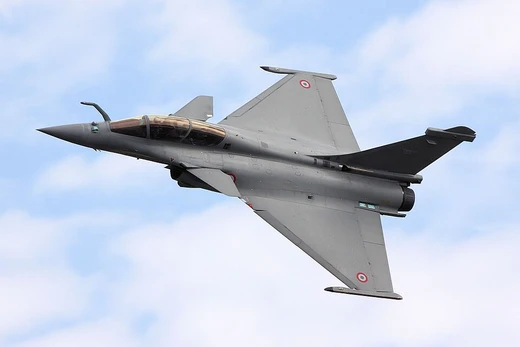
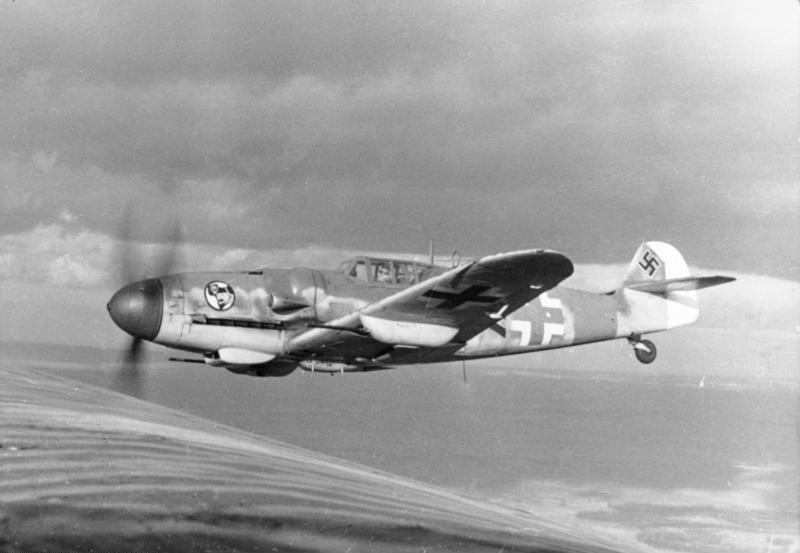
Messerschmitt Bf 109
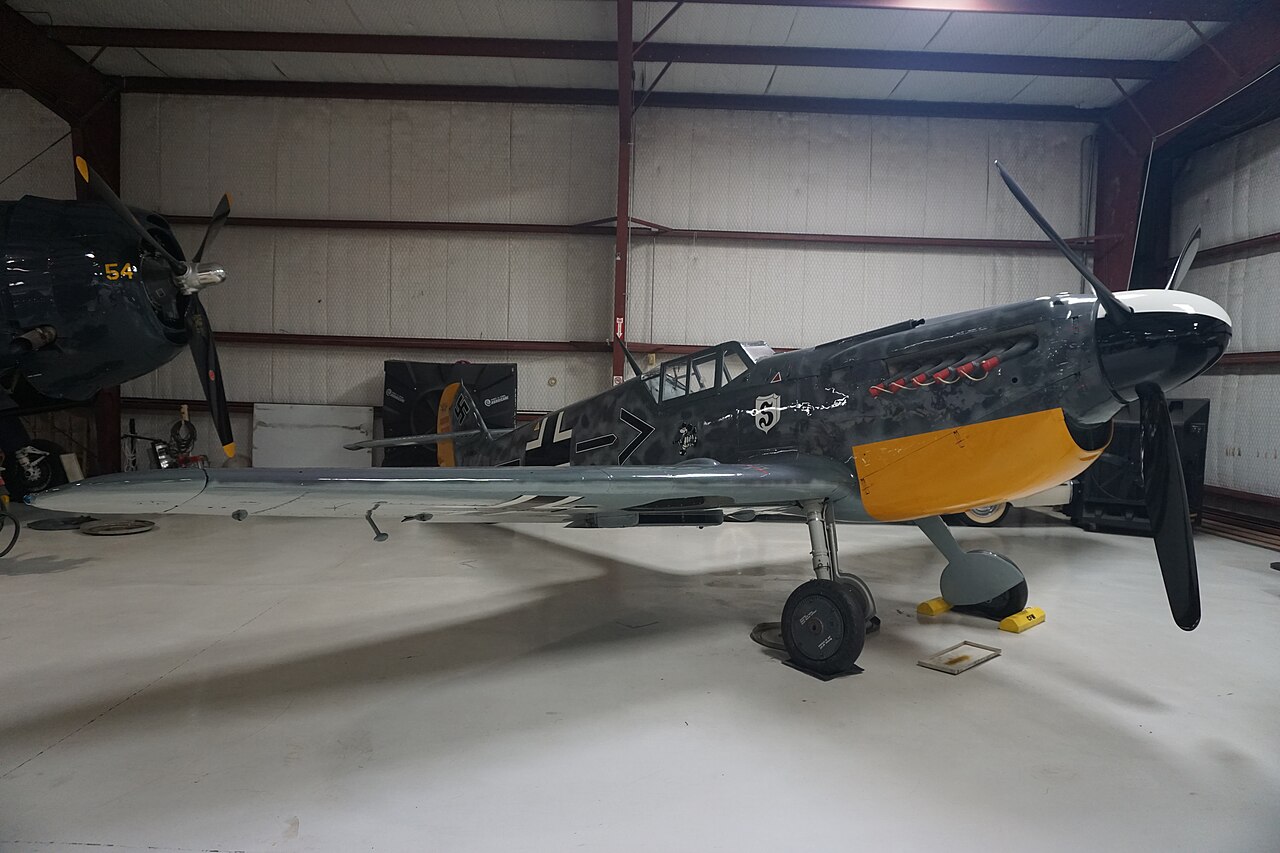
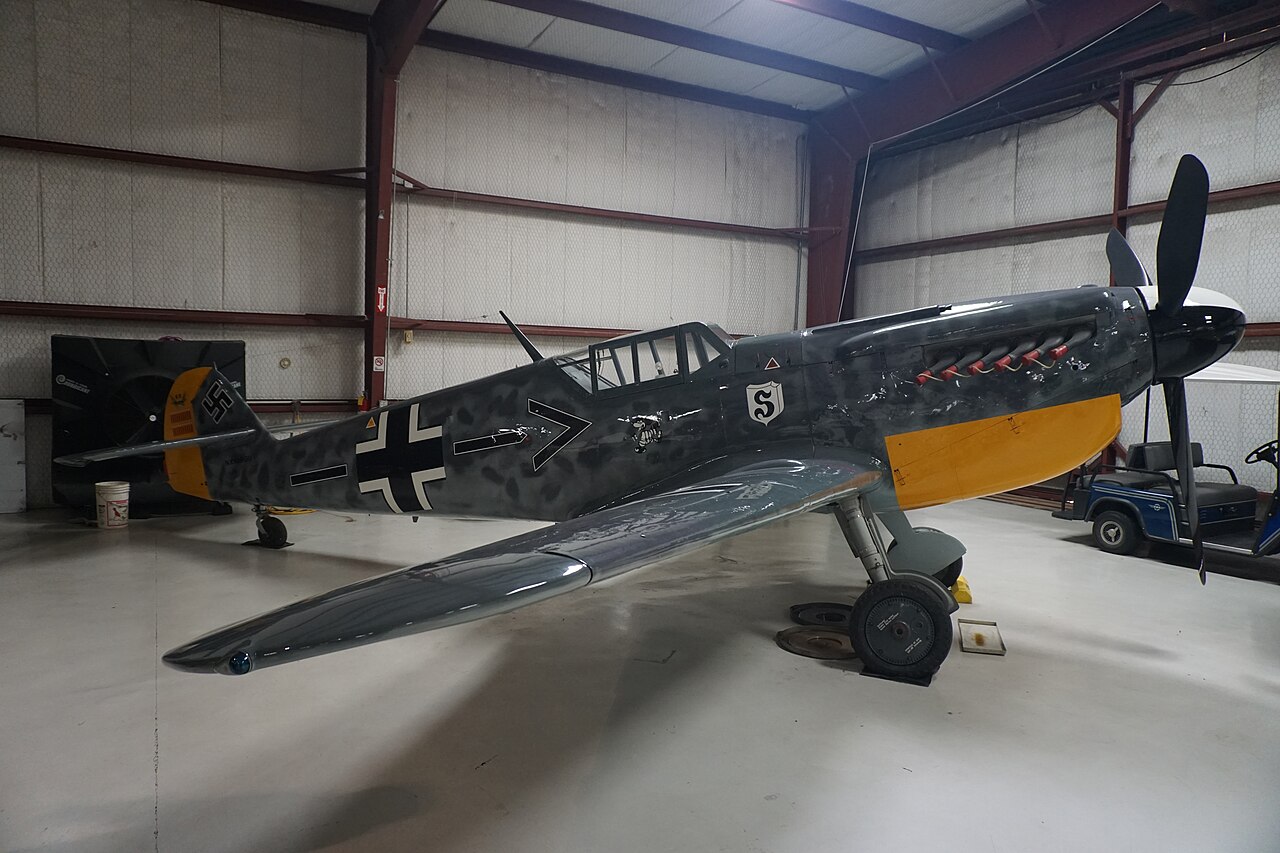
One of the most produced fighters in history, backbone of Luftwaffe.

Michael Barera · CC BY-SA 4.0
Together with the Focke-Wulf Fw 190, it formed the backbone of the Luftwaffe's fighter force during the Second World War. Designed by Willy Messerschmitt and Robert Lusser, it was conceived as an interceptor but later developed to fulfill multiple roles including bomber escort, fighter-bomber, day-, night-, all-weather fighter, ground-attack, and aerial reconnaissance. It was one of the most advanced fighters when it first appeared, with all-metal monocoque construction, a closed canopy, retractable landing gear, and a liquid-cooled, inverted-V12 aero engine.
Lore & Background
It first saw combat during the Spanish Civil War. Some production took place in Nazi concentration camps through slave labor.
Reader's Guide
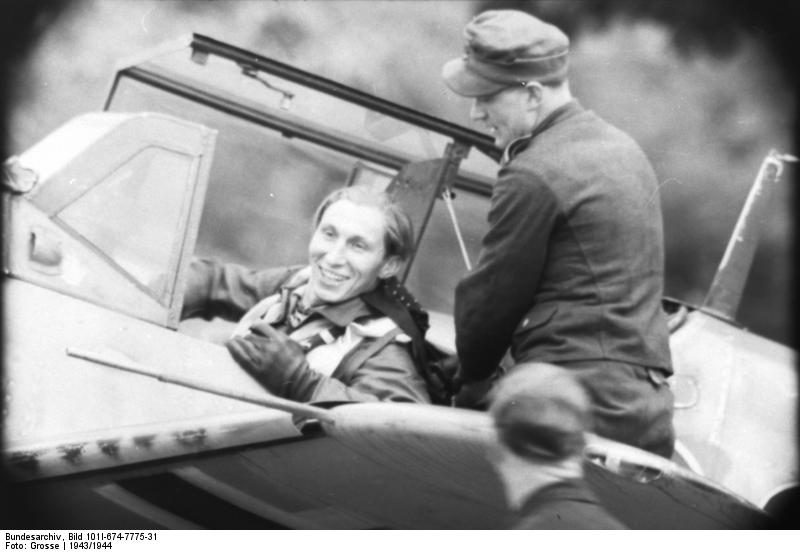
It remained competitive with Allied fighters through constant development. It was also flown by many aces from other countries, notably Finnish pilot Ilmari Juutilainen, the highest-scoring non-German ace. The aircraft continued to be operated by several countries for many years after the war.
Design Origins and the 1935 Competition
During the early 1930s, the Reichsluftfahrtministerium, spurred by Hermann Göring's vision for a dominant offensive fighter, issued a specification for a Kampfzerstörer — a twin-engined, three-seat, all-metal monoplane carrying cannon and an internal bomb bay. Of seven companies approached, only Bayerische Flugzeugwerke, Focke-Wulf, and Henschel submitted designs. BFW took a calculated risk: it dropped the internal bomb-load requirement entirely, redirecting that structural weight toward heavier armament.
A Career Spanning Every Theatre
Its primary tactical vulnerability, however, was a pronounced lack of manoeuvrability compared to single-engined opponents. The RAF exploited this weakness during the Battle of Britain, where Bf 110s tasked with close bomber escort were repeatedly out-turned by Spitfires and Hurricanes. Yet the aircraft found new life as British bombers shifted to nightly raids over German territory; its speed, range, and heavy armament made it well suited to intercepting at night. In the Balkans, North Africa, and along the Eastern Front, it rendered valuable ground support as a fighter-bomber, striking Army targets with its cannon and machine guns.
The Night-Fighting Legacy
As the Luftwaffe's principal Nachtjäger throughout the war, it became the platform on which the majority of German night-fighter aces built their records. The aircraft's combination of speed, range, and heavy forward armament — initially a pair of 20 mm MG FF cannon, four MG 17 machine guns, and a rearward-defensive MG 15 — translated naturally into an effective interceptor configuration, particularly once radar equipment was added.
Structural Limits and the Failure of Successors
This limitation could be softened through disciplined tactics, but it could never be eliminated. The Luftwaffe's attempts to replace it were equally troubled. The result was an aircraft that, by the war's final months, was flying well past its design obsolescence — not because it was the best option available, but because no adequate alternative had materialized. It soldiered on in various roles until the conflict ended, a pragmatic compromise born of engineering setbacks and wartime urgency.
Common Misconceptions (Editorial)
A common misconception is that the Bf 109 was primarily a bomber or ground-attack aircraft from the start. In fact, it was conceived as an interceptor, though it later developed to fulfill multiple roles. Another misconception is that all Bf 109 production took place in standard factories; in reality, some production occurred in Nazi concentration camps through slave labor.
Why It Matters (Editorial)
The Messerschmitt Bf 109 endures as a symbol of both technological advancement and moral failure in wartime aviation. Its advanced design—featuring all-metal construction, retractable landing gear, and a powerful inverted-V12 engine—set a new standard for fighter aircraft, yet the dark reality of its production via slave labor in concentration camps reminds us that even remarkable engineering can be inseparable from profound human suffering.
Gallery
Frequently Asked Questions
What is the Messerschmitt Bf 109?
It is a single-engine monoplane fighter developed by Bayerische Flugzeugwerke in the late 1930s that became the primary interceptor and escort fighter for the German Luftwaffe throughout World War II. Together with the Focke-Wulf Fw 190, it anchored the entire German fighter force for the duration of the war.
Who designed the Bf 109 and what was its original purpose?
Willy Messerschmitt and Robert Lusser led the design team at Bayerische Flugzeugwerke, conceiving the aircraft specifically as a point-defense interceptor. Over time the type was stretched well beyond that initial mission to cover escort, fighter-bomber, night-fighting, all-weather, and ground-attack duties.
More in Warplanes 1-22
Spotted an error? Know more?
This is a living reference — every entry is fact-audited, and reader corrections feed straight into our audit queue. Suggest an edit · See this site's audit record