P-51 Mustang
American long-range fighter and fighter-bomber used in WWII and Korea.

Like tears in rain · CC BY-SA 4.0
The North American Aviation P-51 Mustang is an American long-range, single-seat fighter and fighter-bomber used during World War II and the Korean War, among other conflicts. Kindelberger, the Mustang was created in response to a request from the British Purchasing Commission and became one of the most significant combat aircraft of the mid-20th century.
- Manufacturer
- North American Aviation (NAA)
- Primary users
- USAAF, RAF, United States Air Force
- Armament
- Six .50 caliber (12.7 mm) AN/M2 Browning machine guns
- Wars
- World War II, Korean War
Lore & Background
Kindelberger, in response to a request from the British Purchasing Commission. The commission approached NAA to build Curtiss P-40 fighters under license for the Royal Air Force. Rather than build an old design from another company, NAA proposed the design and production of a more modern fighter. At the start of the Korean War, the Mustang, redesignated F-51, was the main fighter of the United States until jet fighters took over; it then became a specialized fighter-bomber.
Reader's Guide
Its legacy extends into the Korean War, where it served as the main U.S. fighter until jet fighters like the F-86 Sabre took over, after which it became a specialized fighter-bomber. The Mustang remained in service with some air forces until the early 1980s and later became popular as a civilian warbird and air racing aircraft. The design featured innovative elements such as laminar flow airfoils developed with NACA, a rear-mounted cooling arrangement that could exploit the Meredith effect, and a fuselage lofted mathematically using conic sections for smooth, low-drag surfaces.
The Twin-Boom Revolution
They wanted a high-altitude interceptor carrying at least a thousand pounds of weaponry, capable of reaching three hundred sixty miles per hour at altitude and climbing to twenty thousand feet in just six minutes. Lockheed answered by assembling a small, secretive engineering group that operated independently of the main factory, an arrangement that would later earn the name "Skunk Works." Under the guidance of Hall Hibbard and Clarence "Kelly" Johnson, the team settled on a configuration rarely seen in contemporary fighters: two slender booms housing the engines, turbosuperchargers, and tail assembly, with a compact central nacelle carrying the pilot and all armament. Clustering the guns in the nose was a departure from the American norm of wing-mounted weapons, and it paid dividends. The final P-38E layout paired four .50-caliber Brownings with a Hispano 20-millimeter cannon, their trajectories converging between three hundred fifty and four hundred yards, allowing a skilled pilot to engage targets reliably out to a full thousand yards.
One Airplane, Many Missions
Although the Army Air Corps never formally classified the Lightning as a heavy fighter or a dedicated bomber-destroyer, the aircraft quietly assumed those duties and then some. Its twin Allison engines, each fitted with a turbosupercharger, gave the P-38 the high-altitude performance that made it one of the earliest Allied fighters to operate effectively at the top of the envelope. Beyond strafe-and-dive fighter work, the Lightning served as a fighter-bomber, a night interceptor, and—when fitted with external drop tanks—a long-range escort platform for bomber formations. It also flew the demanding pathfinder mission, leading streams of medium and heavy bombers, or even bomb-laden P-38s of its own, toward their assigned targets. Perhaps the most striking evidence of its versatility came in the reconnaissance role: roughly one aircraft in every nine built, around twelve hundred in total, was converted to the F-4 or F-5 camera variant, with weapons stripped and photographic equipment installed. In that capacity the Lightning became one of the most prolific surveillance platforms of the entire war, proving that a single-seat fighter could wear a remarkable number of operational hats.
Aces of the Pacific and a Production Record
The Lightning found its most celebrated home in the Asiatic-Pacific and China-Burma-India theaters, where it became the mount of America's highest-scoring fighter pilots. Richard Bong strung together forty confirmed victories, Thomas McGuire claimed thirty-eight, and Charles H. MacDonald added twenty-seven to his tally, all in the P-38. In the South West Pacific the aircraft served as the principal long-range fighter for the Army Air Forces right up until large numbers of P-51D Mustangs arrived near the war's end. What made the Lightning especially suited to that theater was its turbocharged powerplant; the muffled exhaust also made the aircraft comparatively quiet on approach, an advantage in ambush tactics. On the production side, the P-38 holds a singular distinction: it was the only American fighter kept in large-scale manufacture for the entire span of U.S. involvement, from the attack on Pearl Harbor through Victory over Japan Day. That continuous output ensured that pilots in every Pacific island campaign could count on a steady flow of fresh airframes, a logistical consistency that no other U.S. fighter of the period matched.
Forgiving Hands and a European Farewell
Pilots who flew the Lightning often described it as remarkably forgiving; the aircraft could be pushed into unusual attitudes and mishandled in ways that would ground a less tolerant machine, yet it would recover without incident. One early shortcoming was the initial rate of roll, which lagged behind other contemporary single-engined fighters. Lockheed addressed this in later production variants by fitting hydraulically boosted ailerons, sharpening the turn-in response and closing the gap with rival designs. The twin-boom planform itself was rare among wartime production fighters—only the Dutch Fokker G.I, the later Northrop P-61 Black Widow, and the Swedish SAAB 21 shared a broadly similar layout. Despite these strengths, the P-38's career in the European theater was ultimately shortened by the arrival of a faster rival. The P-38's European chapter was brief, but its Pacific legacy and its record of continuous production ensured that its name remained one of the most recognizable in American aviation history.
Common Misconceptions (Editorial)
Some believe the P-51 was designed from scratch for the U.S. military, but it was actually created in response to a request from the British Purchasing Commission. Another misconception is that North American Aviation simply built someone else’s design; in fact, the company proposed and built its own more modern fighter rather than license-produce the Curtiss P-40. Additionally, it is sometimes thought that the Mustang served only in World War II, but the facts show it also fought in the Korean War, initially as the main U.S. fighter and later as a specialized fighter-bomber under the designation F-51.
Why It Matters (Editorial)
The P-51 Mustang endures as a symbol of American ingenuity and adaptability, born not from a government directive but from a private company’s bold response to an allied request. Its long-range, single-seat design allowed it to dominate the skies over Europe in World War II and remain relevant into the jet age of the Korean War. The Mustang’s legacy reminds us that wartime innovation can arise from collaboration and a refusal to settle for outdated technology.
Gallery
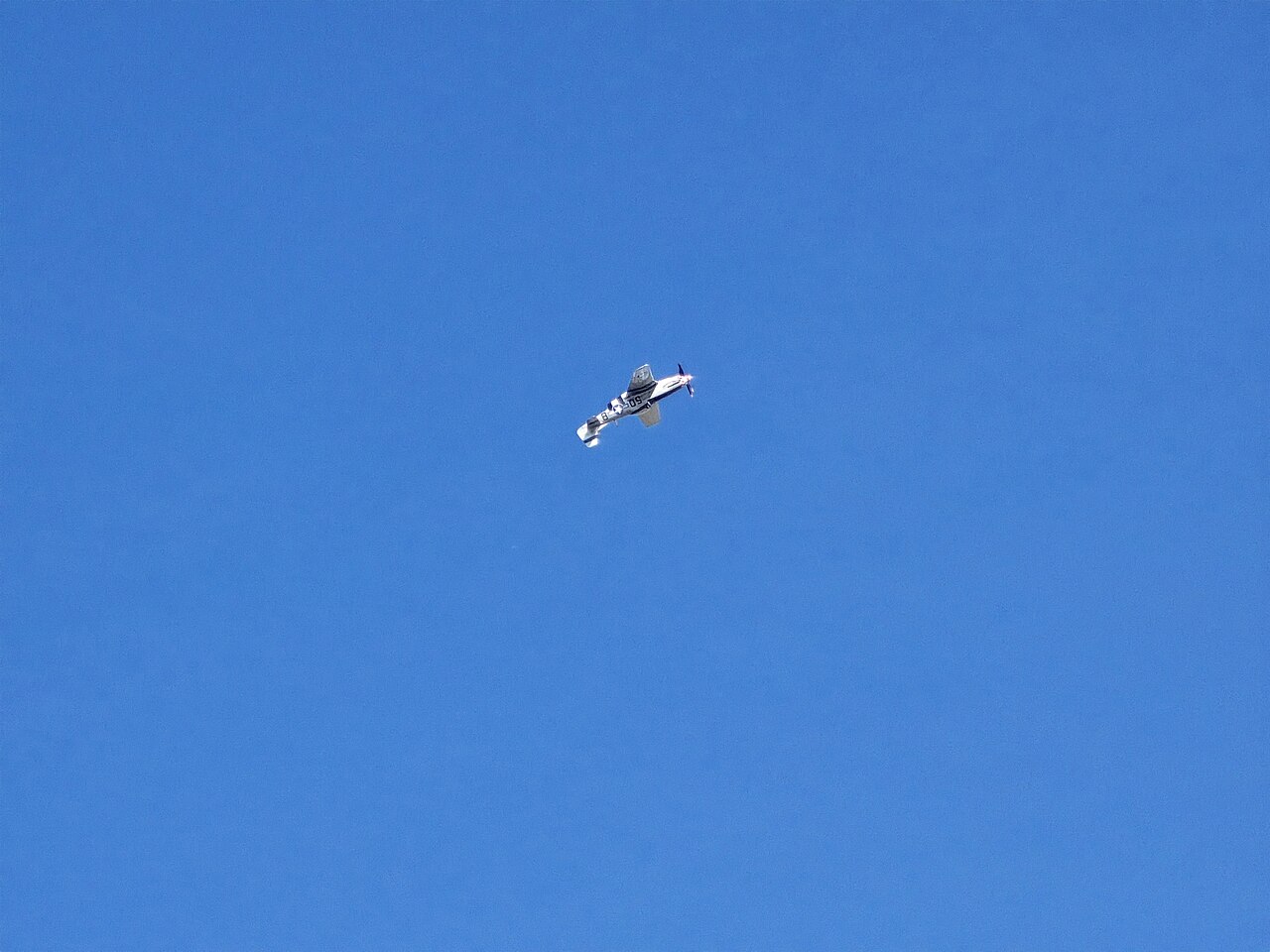
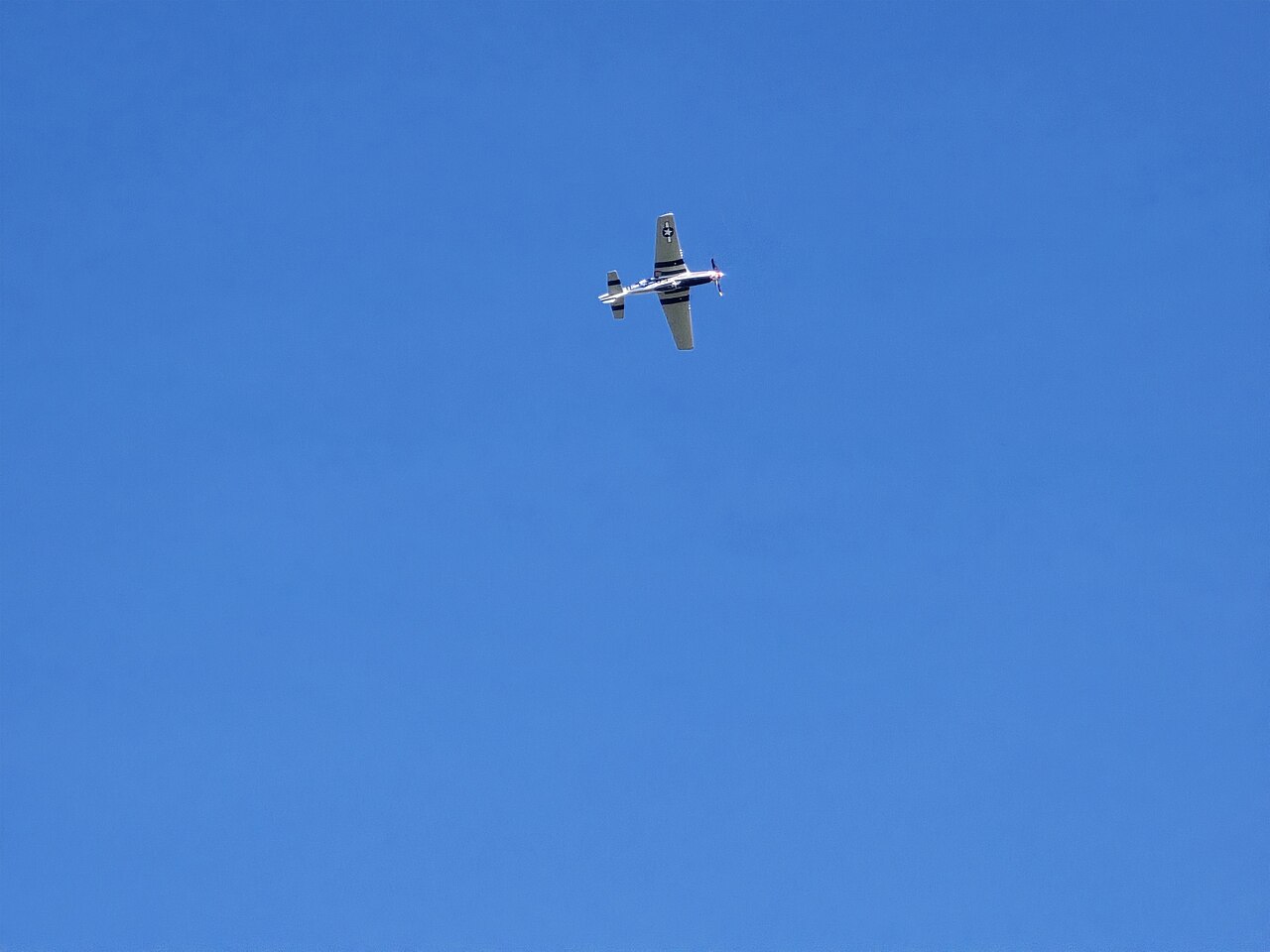
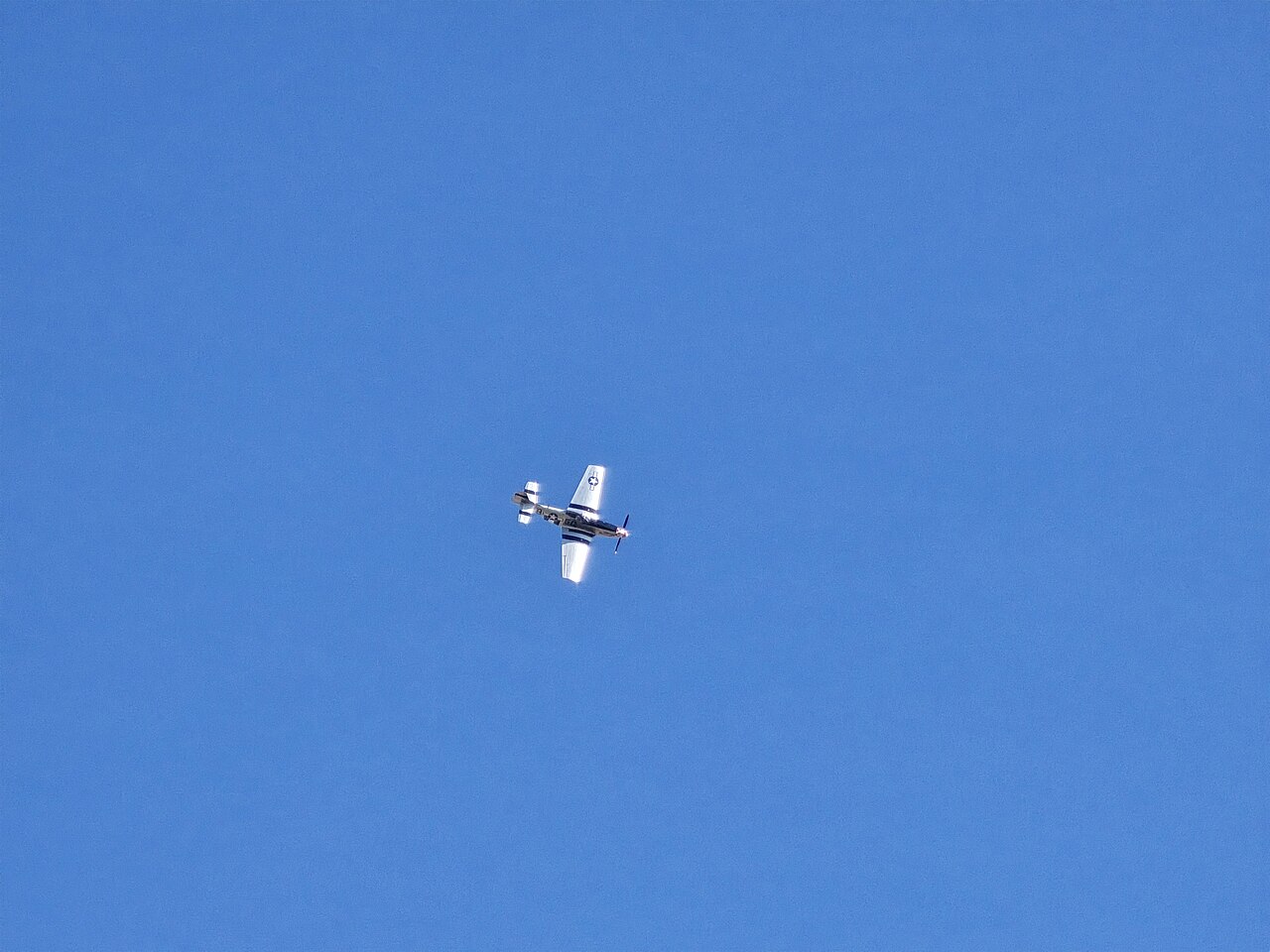
Frequently Asked Questions
What are P-51 Mustang's powers/role?
The Mustang's primary job was long-range escort of Allied bombers, with a secondary fighter-bomber role. It carried six .50 caliber Browning machine guns, and its definitive Packard-built Merlin engine gave it the range and speed to operate deep into enemy airspace.
How does P-51 Mustang's story end?
The Mustang saw its last major combat in the Korean War before being retired from frontline duty. Many airframes were converted to training, target-towing, or civilian use, and a large number still fly in private hands today.
Why is P-51 Mustang important?
The Mustang is widely considered one of the most significant combat aircraft of the mid-20th century because it solved the critical problem of protecting Allied bombers over deep enemy territory. Its blend of range, speed, and firepower fundamentally shifted the air war over Europe.
More in Warplanes 1-22
Spotted an error? Know more?
This is a living reference — every entry is fact-audited, and reader corrections feed straight into our audit queue. Suggest an edit · See this site's audit record