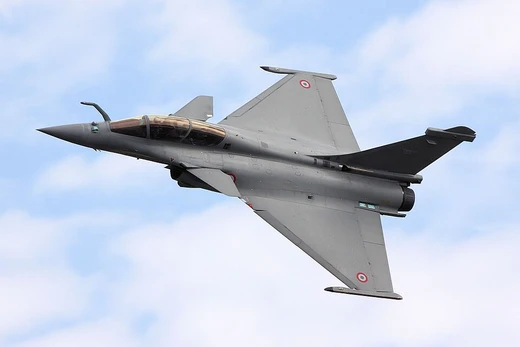
F-35 Lightning II
American family of supersonic stealth strike fighters.

Michael Barera · CC BY-SA 4.0
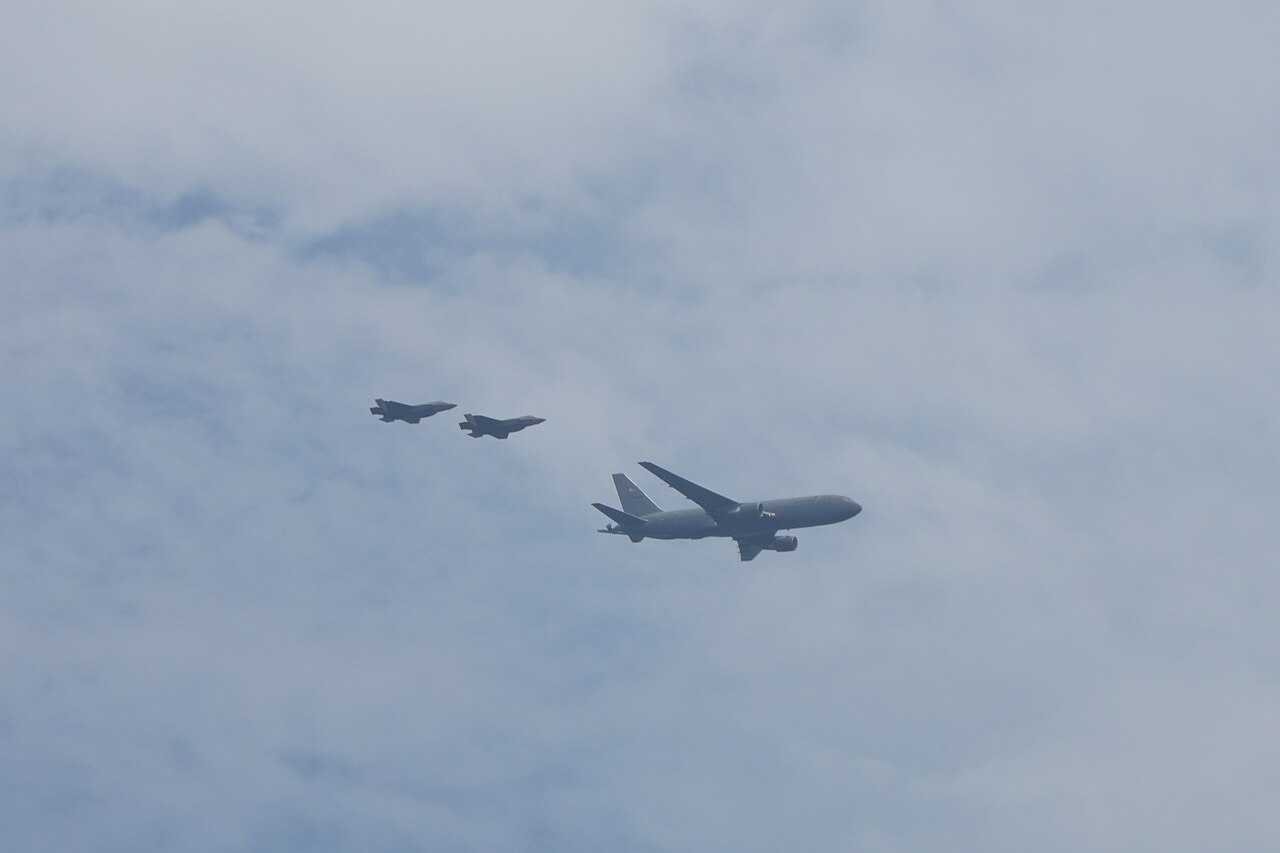
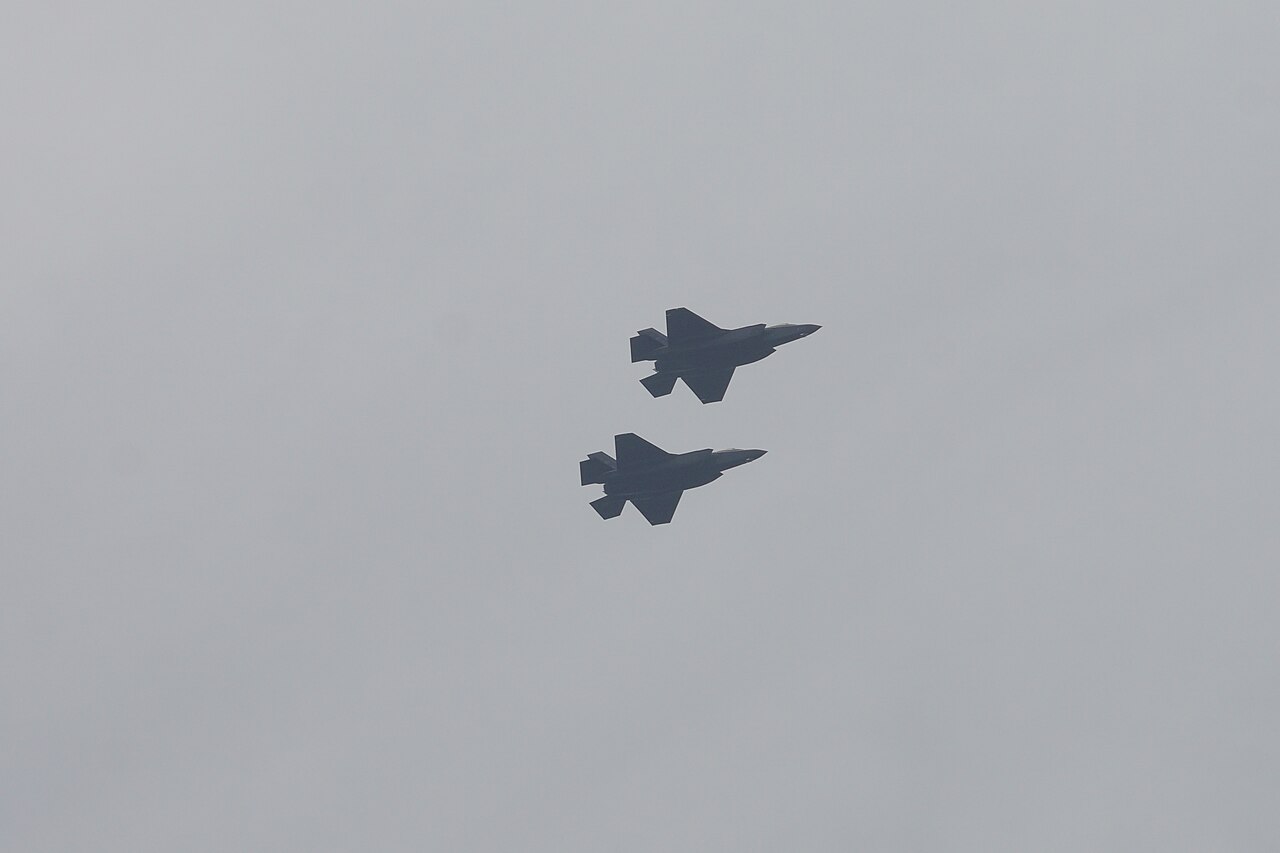
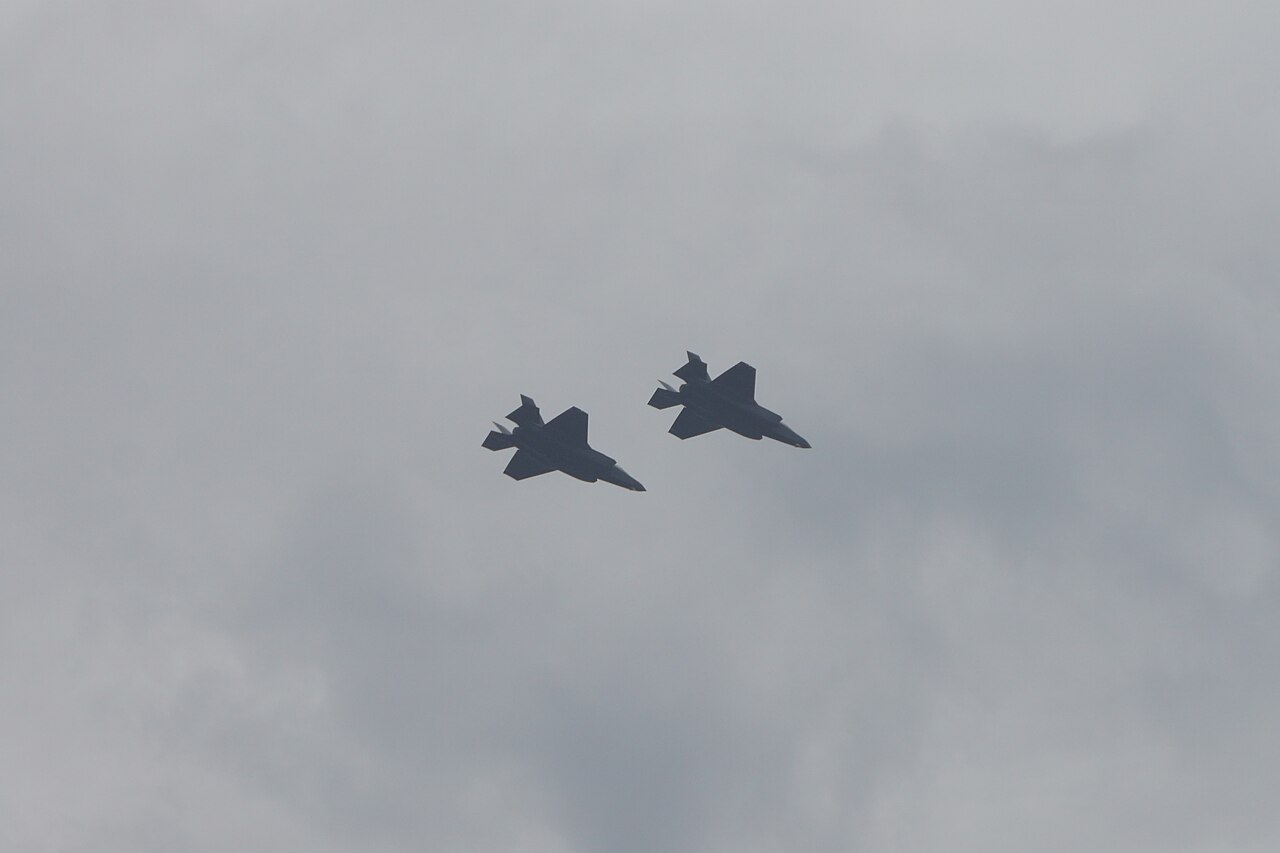
The Lockheed Martin F-35 Lightning II is an American family of single-seat, single-engine, supersonic stealth strike fighters. Designed for air superiority, strike missions, electronic warfare, and intelligence, surveillance, and reconnaissance, it is a multirole combat aircraft.
- First flight
- 2006
- Variants
- F-35A, F-35B, F-35C
- Primary contractor
- Lockheed Martin
- Partners
- Northrop Grumman, BAE Systems
Lore & Background
The F-35 was the product of the Joint Strike Fighter (JSF) program, which merged various combat aircraft programs from the 1980s and 1990s. Lockheed's Skunk Works conducted research for a stealthy supersonic STOVL fighter, exploring the shaft-driven lift fan (SDLF) system.
Reader's Guide
The program has drawn criticism for its unprecedented size, complexity, ballooning costs, and delayed deliveries, partially caused by low rate initial production during development. The F-35A can deliver two US B61 nuclear bombs, and several nations plan to buy nuclear-capable variants.
Did You Know?
- The F-35 has three main variants: the conventional takeoff and landing F-35A, the short take-off and vertical-landing F-35B, and the catapult-assisted take-off but arrested recovery F-35C.
The Tiered Partnership Architecture
The F-35 program was conceived as a multinational venture from its earliest planning stages, with numerous nations expected to both contribute to manufacturing and ultimately procure the aircraft for their own armed forces. The partnership operates through three distinct participation levels that reflect each country's financial stake, the scope of technology transfer and subcontract opportunities available to its domestic industry, and its priority in receiving production aircraft. Level 2 partners Italy and the Netherlands contribute one billion and eight hundred million dollars respectively. Israel and Singapore hold a separate status as security cooperative participants. In total, the eight non-U.S.
The Economics of Scale and Cost
The financial magnitude of the F-35 program is immense. Total development costs are estimated to exceed 40 billion dollars, while purchasing an estimated 2,400 aircraft is projected to require an additional 200 billion.
The Software Sovereignty Dispute
One of the most contentious issues facing the F-35's international partners involves access to the aircraft's computer software code. The Lightning II depends heavily on software for radar operation, weapons systems, flight controls, and maintenance procedures. The U.S. military declared that no partner nation would receive access to these codes, with all software upgrades to be conducted exclusively on American soil. This unilateral decision generated widespread dissatisfaction among Australia, Britain, Canada, Denmark, Italy, the Netherlands, Norway, and Turkey. The United Kingdom went so far as to indicate it might cancel its entire F-35 order if denied coding access, arguing that without it the nation would be unable to maintain its own aircraft. Allen Sens, a defence analyst at the University of British Columbia, called the situation really quite unusual given that these were among America's closest allies. He suggested the decision may stem from software security concerns or Congressional pressure to protect domestic jobs. The episode highlighted a fundamental tension: nations investing hundreds of millions in development yet remaining dependent on a single country for the most critical operational knowledge.
Diplomatic Maneuvering and Alliance Strains
The F-35's international rollout has been marked by significant diplomatic friction. diplomatic cables revealed that the State Department was actively marketing the aircraft through diplomatic channels and had applied serious pressure on Norway to purchase it. Jeff Abramson of the Arms Control Association characterized this push as part of the Obama administration's national export initiative, aimed at doubling American export sales through increased arms transactions. Several partner nations, including the UK, Norway, the Netherlands, and Israel, publicly wavered in their commitment at various points, hinting that design goals were overambitious or threatening to pivot toward the Eurofighter Typhoon, Saab JAS 39 Gripen, or Dassault Rafale if they did not receive more subcontracts and technology transfer. European participation in the JSF project effectively divided the continent and helped preempt a unified European fifth-generation fighter program, undercutting exports for their existing models.
Common Misconceptions (Editorial)
Some believe the F-35 is a single model with one role, but the facts show it has three distinct variants—the F-35A, F-35B, and F-35C—each tailored for different takeoff and recovery methods. Another misconception is that the F-35 was developed from scratch; in truth, it was the product of the Joint Strike Fighter program, which merged several existing 1980s and 1990s combat aircraft programs.
Why It Matters (Editorial)
The F-35 Lightning II matters because it represents a generational leap in multirole combat capability, combining stealth, supersonic speed, and advanced electronic warfare in a single platform. Its endurance in modern air forces is driven by the need for a versatile, networked aircraft that can perform air superiority, strike, and surveillance missions, making it a cornerstone of allied defense strategies for decades to come.
Gallery
Frequently Asked Questions
What is the F-35 Lightning II?
It is a single-seat, single-engine stealth strike fighter built by Lockheed Martin for the United States and partner nations. The jet is designed to fly supersonic and handle multiple combat roles rather than being limited to one specific mission.
What variants of the F-35 Lightning II exist?
Three versions are produced: the F-35A for conventional runways, the F-35B for short takeoffs and vertical landings, and the F-35C tailored to carrier operations. All share the same core airframe but differ in wing span, landing-gear strength, and thrust-vectoring hardware.
What missions can the F-35 Lightning II perform?
The aircraft is built to act as an air-superiority fighter, a precision strike platform, an electronic-warfare node, and an intelligence, surveillance, and reconnaissance asset. This multirole philosophy lets one airframe cover tasks that previously required several different types of jets.
More in Warplanes 1-22
Spotted an error? Know more?
This is a living reference — every entry is fact-audited, and reader corrections feed straight into our audit queue. Suggest an edit · See this site's audit record