A6M Zero
A dominant carrier fighter that defined early Pacific air combat.

Breeze (Sergeant) Royal Air Force official photographer · Public domain
It is considered to have been the most capable carrier-based fighter in the world when introduced early in World War II, combining excellent maneuverability, high airspeed, strong firepower, and very long range.
- Manufacturer
- Mitsubishi Aircraft Company (Mitsubishi Heavy Industries)
- Operator
- Imperial Japanese Navy
- Type
- Long-range carrier-based fighter
- Official Allied Code Name
- Zeke
- Common Name
- Zero
- Designer
- Jiro Horikoshi
Lore & Background
The A6M Zero was developed to replace the Mitsubishi A5M fighter. Nakajima considered the requirements unachievable and withdrew, but Mitsubishi's chief designer Jiro Horikoshi believed they could be met by making the aircraft as light as possible. The Zero was built largely of a new top-secret aluminum alloy called 'extra super duralumin,' which was lighter and stronger but prone to corrosive attack, countered with a zinc chromate coating. No armor or self-sealing fuel tanks were used, making the Zero lighter and more maneuverable but prone to catching fire when hit. The Zero gained a reputation as a dogfighter, achieving an outstanding kill ratio of 12 to 1 in early combat.
Reader's Guide
The A6M Zero's significance lies in its revolutionary design that prioritized lightness and range, enabling it to dominate early Pacific air battles. Its combination of maneuverability, firepower, and endurance made it a formidable opponent, but its lack of armor and self-sealing fuel tanks made it vulnerable. It was later adapted for kamikaze operations. Japan produced more Zeros than any other combat aircraft model during the war. The Zero's legacy is that of a pioneering fighter that shaped early Pacific air warfare but whose design trade-offs ultimately limited its longevity against evolving Allied technology.
Did You Know?
- The Zero's official Allied reporting name was 'Zeke,' but 'Zero' was used more commonly.
- The Zero lacked hydraulic boosting for its ailerons and rudder, making it difficult to maneuver at high speeds.
- Early models had servo tabs on ailerons to reduce control forces, but these were discontinued after pilots overstressed wings.
- The Zero's stalling speed was well below 60 knots, contributing to its phenomenal maneuverability.
Pacific Theater Dominance
The A6M Zero held a position of extraordinary prominence within the Imperial Japanese Navy's air arm during World War II. Its operational reach stretched across the vast Pacific and into the northeast Indian Ocean, where it participated in carrier-based strikes and defensive engagements. The Zero flew from a remarkable roster of carriers, from the heavy fleet ships like Akagi, Kaga, Sōryū, Shōkaku, and Zuikaku—which all took part in the Pearl Harbor raid and subsequent actions at Rabaul, the Indian Ocean, and Midway—to lighter escort vessels such as Taiyō, Shin'yō, and Chiyoda that operated in the South Seas, New Guinea, Singapore, and the Philippines. As the war progressed, later variants like the A6M3 and A6M5 replaced earlier models on many of these ships, reflecting the aircraft's continuous evolution throughout the conflict.
Chinese Civil War Service
Following the end of the Pacific War, a number of A6M aircraft—spanning the A6M2, A6M3, and A6M5 variants—found their way into the hands of both the Nationalist and Communist forces during the Chinese Civil War. The Nationalists' captured planes had originally belonged to a wide array of Japanese mainland and Formosan units. On the mainland, these included the 12th, 13th, 14th, and 15th Naval Units as well as the Shanghai Kōkūtai. In Formosa, the aircraft had been assigned to several distinct naval air groups: Hao Toko, Takao, Tetshu, Kagi, Toki, and Tainan Kōkūtai. The fact that both rival Chinese factions operated these same Japanese fighters illustrates how the Zero's service life extended well beyond its original Japanese operators, finding a second chapter in the turbulent post-war conflicts on the Chinese mainland.
Post-War Service in Southeast Asia
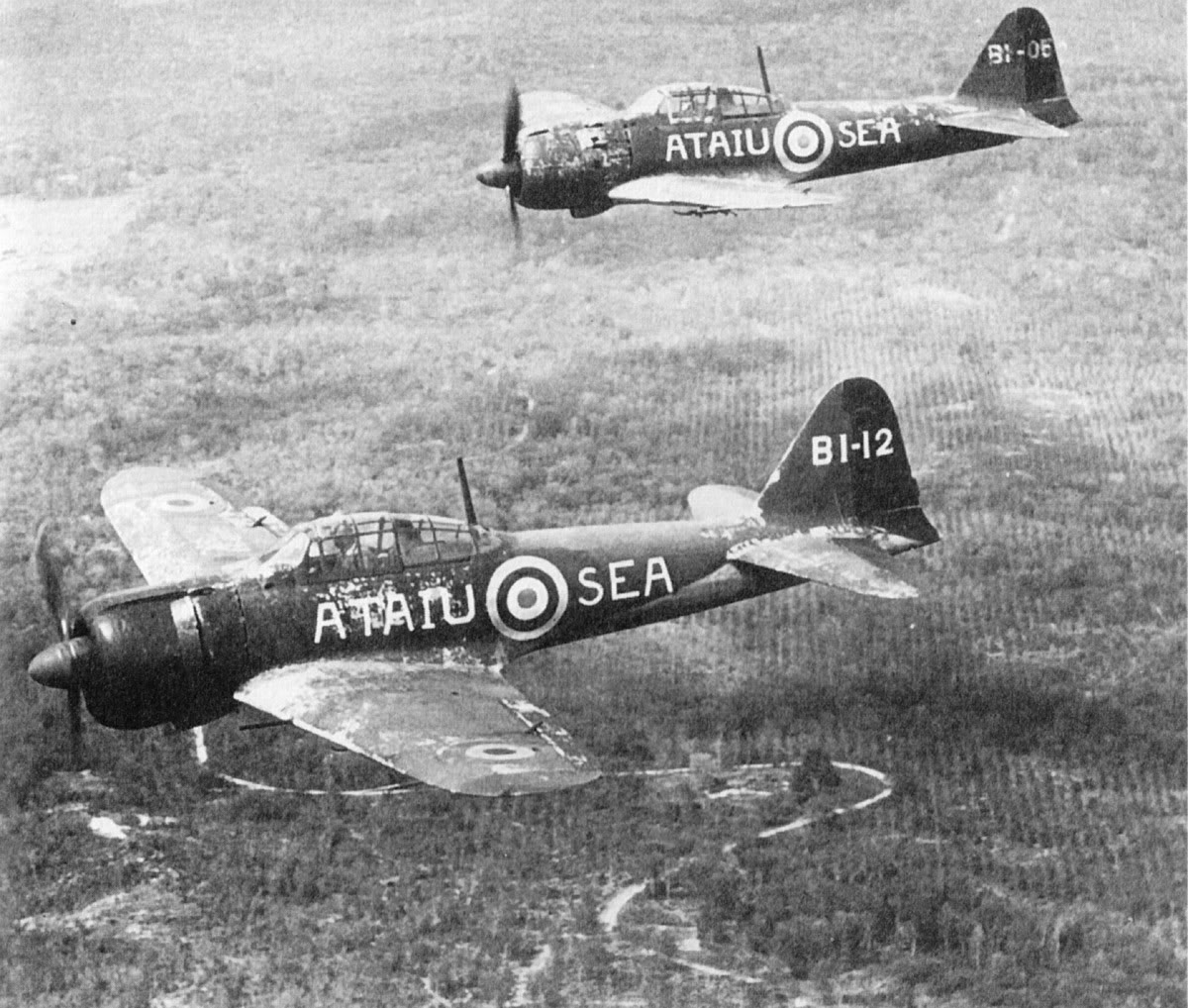
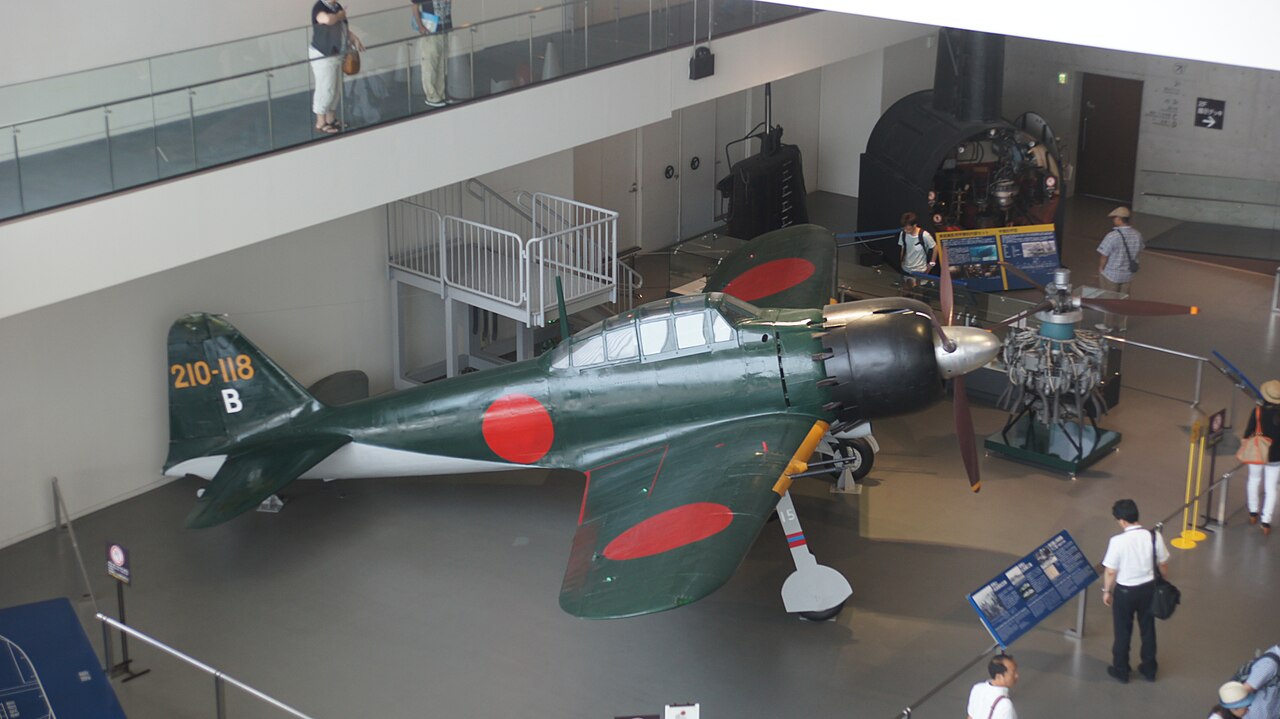
In the immediate aftermath of the Pacific War, the A6M continued to see active service in Southeast Asian conflicts. The French Naval Aviation also inducted a single A6M2-N into its inventory, though that particular aircraft met an untimely end, crashing shortly after completing an overhaul. A handful of survivors were preserved at Kalijati Air Base near Subang in West Java and at the Museum Dirgantara Udara in Yogyakarta, close to Adi Sucipto Airport.
Land-Based Fighter Units
Beyond its famous carrier operations, the A6M served extensively in the Japanese Land Air Corps, where dedicated units operated from a network of airbases across the empire. The Genzan Air Group, celebrated as 'the Protector of Chosen' after its principal base, flew A6M2 and A6M3 fighters alongside G4M bombers from Genzan, Saigon in French Indochina, Malacca, Rabaul, and the Admiralty Islands. Upon returning to its home station, the unit transitioned to operational training with A6M5b and A6M5-K aircraft and later served as an interceptor force, fielding J2M3, N1K2, and A6M5c types against both Soviet and American aircraft. The Chitose unit operated A6M2, A6M3, and A6M5 fighters from bases in the Wake Island metropolitan area, Kwajalein in the South Seas Mandate, and the Solomon Islands, before merging into the 653rd Air Corps. The Kanoya mixed group combined Reisen fighters with G4M 'Betty' bombers, operating from Kanoya in Kagoshima, the Andaman Islands, Kyūshū, and Malaysia, eventually returning to the metropolitan area equipped with A6M5c aircraft.
Common Misconceptions (Editorial)
1. Some believe the Zero's design was a failure due to its lack of armor and self-sealing fuel tanks, but these omissions were intentional trade-offs to achieve lightness and maneuverability—the very qualities that made it the most capable carrier-based fighter when introduced. 2. A common misconception is that the Zero was unreliable or poorly built; in fact, it was constructed from a cutting-edge "extra super duralumin" alloy, though this material required a zinc chromate coating to prevent corrosion.
Why It Matters (Editorial)
The A6M Zero endures as a symbol of how wartime innovation can produce a fighter that dominates through extreme specialization—trading survivability for unmatched agility and range. Its early 12-to-1 kill ratio and legendary dogfighting reputation remind us that military effectiveness is often a matter of design philosophy and timing, not just raw power or protection.
Gallery
Frequently Asked Questions
What are A6M Zero's powers and role?
Its role was to provide long-range escort and air-superiority coverage for Japanese carrier strike groups. The aircraft combined outstanding turning agility, high airspeed, solid cannon and machine-gun armament, and a remarkably large fuel range for a carrier fighter.
Why is A6M Zero important?
The Zero defined early Pacific air combat and set the benchmark for carrier-based fighter performance that both sides had to respond to. Its blend of range and maneuverability made it the defining symbol of Japanese naval air power throughout World War II.
What is the A6M Zero's official Allied code name?
Allied forces assigned the Zero the identification code name "Zeke" for use in intelligence reports and communications. In everyday military and popular history, however, it is almost universally referred to simply as the Zero.
More in Warplanes 1-22
Spotted an error? Know more?
This is a living reference — every entry is fact-audited, and reader corrections feed straight into our audit queue. Suggest an edit · See this site's audit record