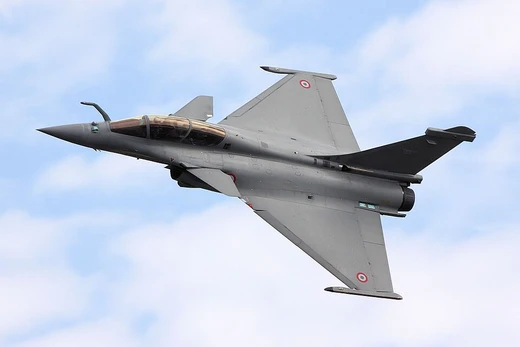
MiG-21
Soviet supersonic jet fighter and interceptor, widely exported.

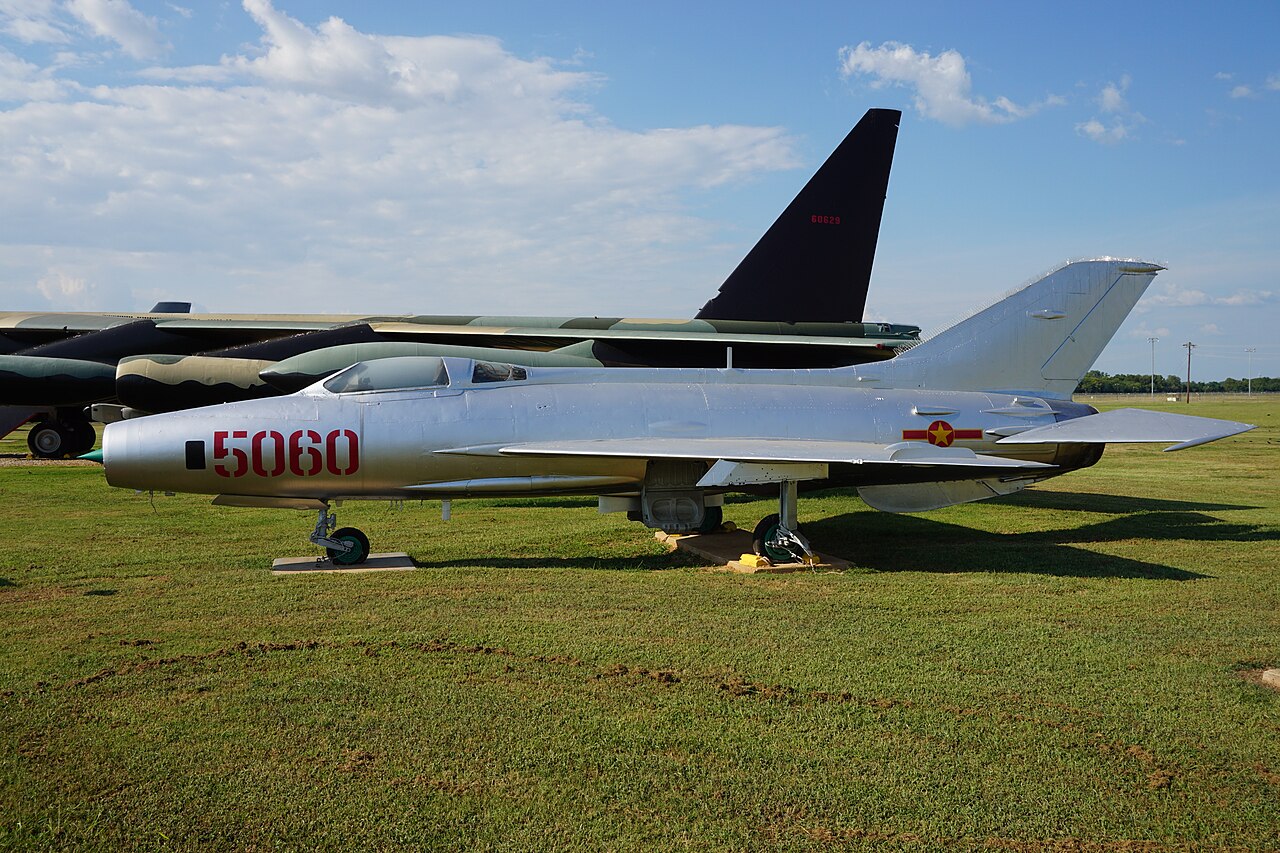
Michael Barera · CC BY-SA 4.0
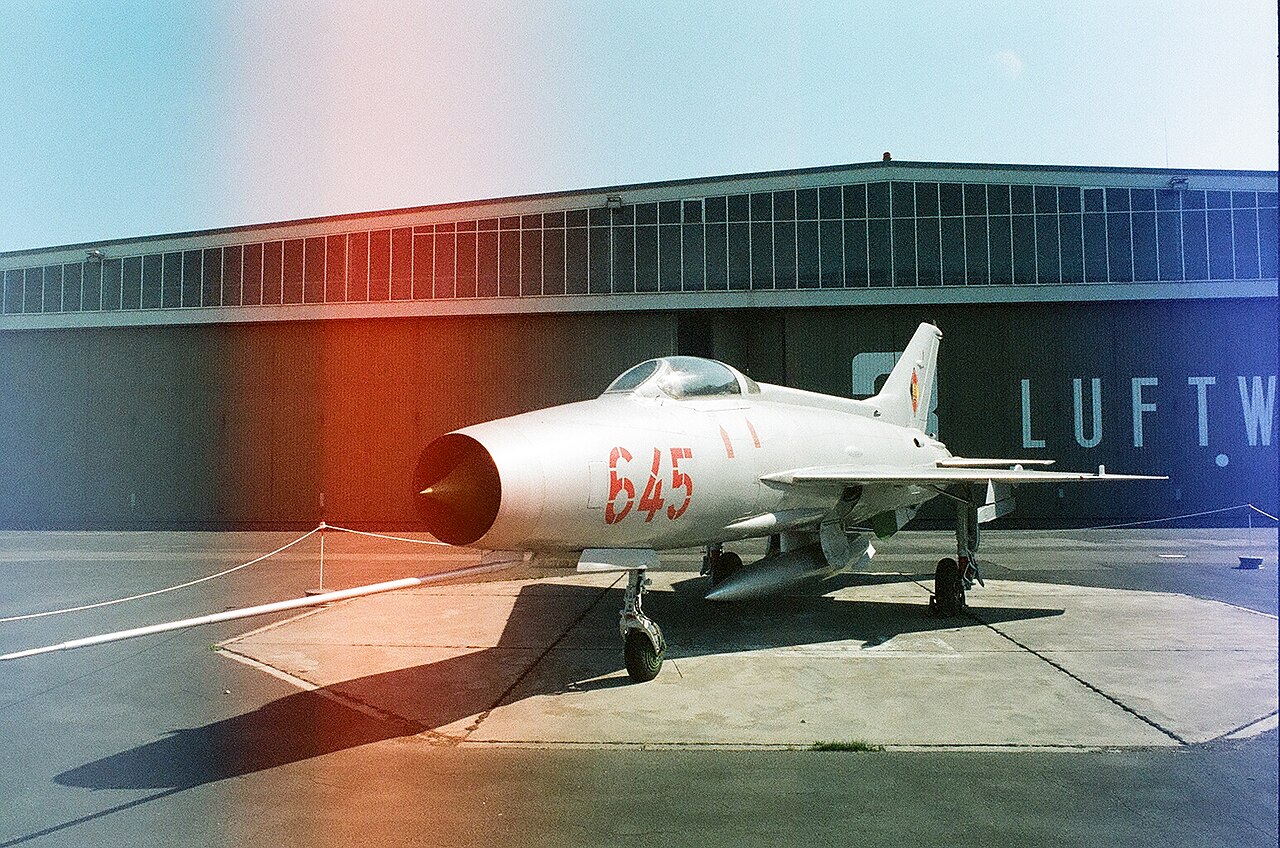
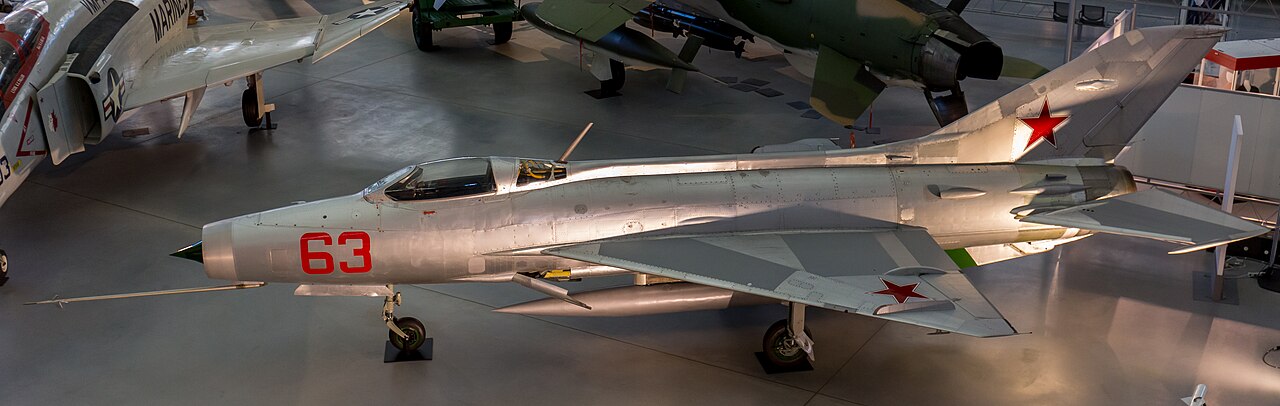
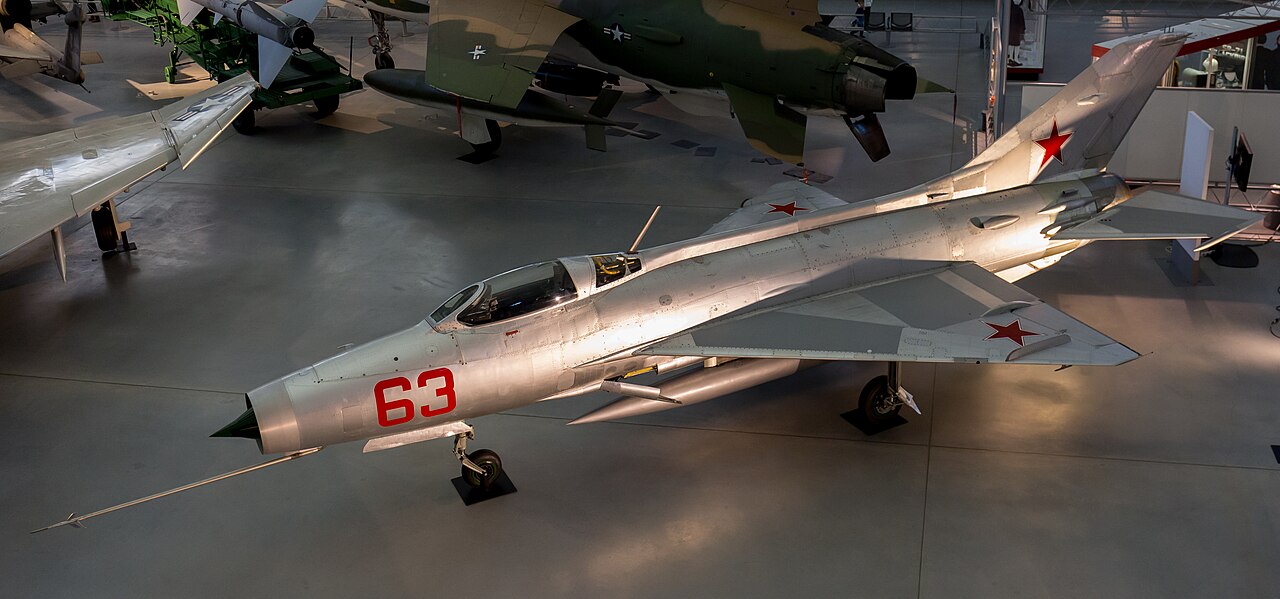
The Mikoyan-Gurevich MiG-21 (NATO reporting name: Fishbed) is a supersonic jet fighter and interceptor aircraft designed by the Mikoyan-Gurevich Design Bureau in the Soviet Union. It is the most-produced supersonic jet aircraft in aviation history and the most-produced combat aircraft since the Korean War, serving approximately 60 countries across four continents for seven decades after its maiden flight.
- field
- Aviation / Military Aircraft
- nationality
- Soviet Union
- known_for
- Most-produced supersonic jet aircraft; delta-wing interceptor and fighter
Lore & Background
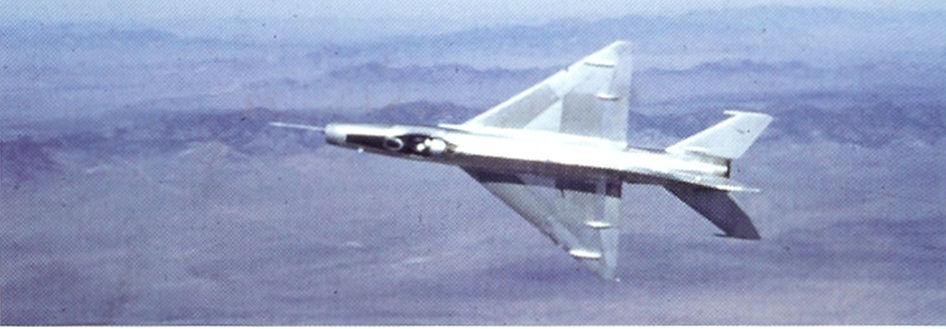
The MiG-21 was the first successful Soviet aircraft combining fighter and interceptor characteristics in a single lightweight design, achieving Mach 2 with a relatively low-powered afterburning turbojet. The MiG-21's delta wing, with a leading-edge sweep of 57°, was excellent for fast-climbing interception but caused rapid speed loss in turning combat. The aircraft had a short range, exacerbated by poor internal fuel tank placement ahead of the center of gravity, leading to stability issues and an endurance of only 45 minutes clean.
Reader's Guide
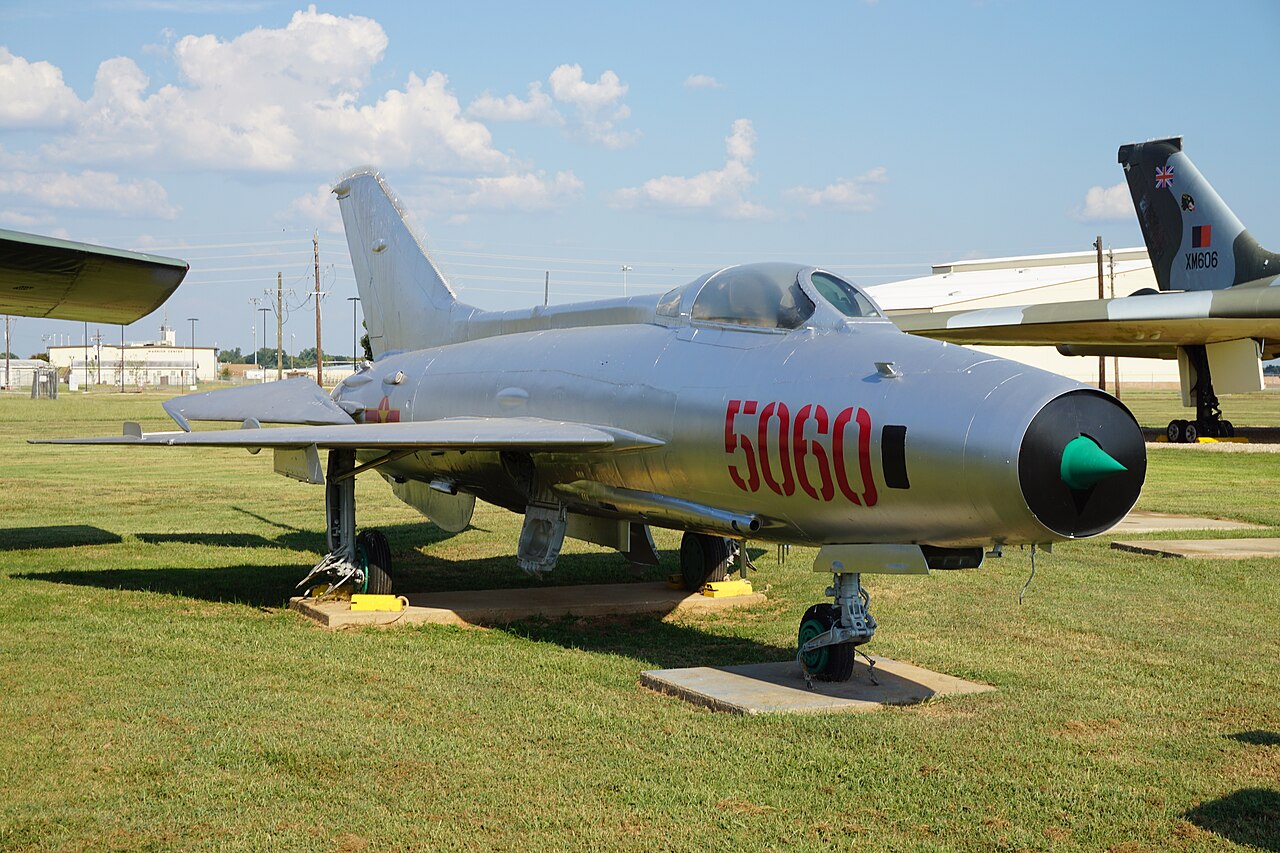
The MiG-21's significance lies in its unprecedented production numbers and global reach. Its simple controls, engine, weapons, and avionics made it attractive to developing countries with limited training programs, despite being technologically inferior to more advanced fighters. The aircraft's low production and maintenance costs ensured its popularity among nations buying Eastern Bloc hardware. The MiG-21 set records for production and service longevity, remaining in use seven decades after its maiden flight. Its design influenced other Soviet aircraft, though its characteristic shock cone and front air intake had limited development potential due to small radar space. The MiG-21 was eventually replaced by the variable-geometry MiG-23 and MiG-27 for ground support, and later by the MiG-29 as a maneuvering dogfighter.
Did You Know?
- The MiG-21 is nicknamed 'Balalaika' due to its planform resembling the stringed instrument, 'Ołówek' (Polish for 'pencil') for its fuselage shape, and 'Én Bạc' (Vietnamese for 'silver swallow').
- The MiG-21MF was cheaper than the BMP-1 infantry fighting vehicle, while the F-4 Phantom's cost was several times higher.
- The emergency power mode on the MiG-21bis produced a 10–12 meter long exhaust with six or seven rhomboid shock diamonds, and its use was limited to two minutes to prevent engine overheating.
Common Misconceptions (Editorial)
Some believe the MiG-21 was only a dogfighter, but it was actually designed as a combined fighter and interceptor, with its delta wing optimized for fast-climbing interception rather than sustained turning combat. Others assume it had a long range, but in reality its internal fuel tank placement caused stability issues and gave it an endurance of only 45 minutes clean.
Why It Matters (Editorial)
The MiG-21 matters because it democratized supersonic air power, becoming the most-produced supersonic jet in history and serving some 60 nations across four continents. Its seven-decade endurance is a testament to how a simple, lightweight design can remain relevant through constant upgrades and sheer numbers, even as more expensive rivals come and go.
Gallery
Frequently Asked Questions
What is the MiG-21?
The MiG-21, known to NATO as "Fishbed," is a Soviet supersonic jet fighter and interceptor with a distinctive delta-wing layout. It was developed by the Mikoyan-Gurevich Design Bureau and became one of the most widely exported combat aircraft of the Cold War era.
Why is the MiG-21 so important in aviation history?
It is the most-produced supersonic jet aircraft ever built and the most-produced combat plane since the Korean War. Roughly sixty nations across four continents flew the type over a span of seven decades, making it a defining symbol of Cold War air power.
What combat role did the MiG-21 fill?
It served as both an air-superiority fighter and a dedicated interceptor designed to intercept and destroy incoming enemy aircraft. Its supersonic speed, compact delta-wing airframe, and heavy air-to-air armament made it a versatile backbone for many air forces.
More in Warplanes 1-22
Spotted an error? Know more?
This is a living reference — every entry is fact-audited, and reader corrections feed straight into our audit queue. Suggest an edit · See this site's audit record