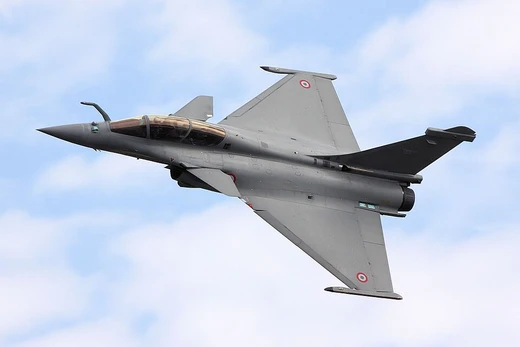
Eurofighter Typhoon
European multinational twin-engine supersonic canard delta wing fighter.

via Wikipedia: Eurofighter Typhoon · see source
The Eurofighter Typhoon is a European multinational twin-engine, supersonic, canard delta wing, multirole fighter. Designed originally as an air-superiority fighter, it is manufactured by a consortium of Airbus, BAE Systems and Leonardo through the joint holding company Eurofighter Jagdflugzeug GmbH. The NATO Eurofighter and Tornado Management Agency, representing the UK, Germany, Italy and Spain, manages the project and is the prime customer.
- First flight
- 27 March 1994 (prototype)
- Introduction
- 2003
- Manufacturer
- Eurofighter Jagdflugzeug GmbH (Airbus, BAE Systems, Leonardo)
- Primary users
- UK, Germany, Italy, Spain, Austria, Saudi Arabia, Oman
- Number built
- 680 (as of November 2023)
- Role
- Multirole fighter (originally air-superiority)
Verified Timeline
Lore & Background
Development began in 1983 with the Future European Fighter Aircraft programme, a multinational collaboration among the UK, Germany, France, Italy and Spain. Disagreements over design authority and operational requirements led France to leave the consortium to develop the Dassault Rafale independently. A technology demonstrator, the British Aerospace EAP, first flew on 6 August 1986; a Eurofighter prototype made its maiden flight on 27 March 1994. The aircraft's name, Typhoon, was adopted in September 1998 and the first production contracts were also signed that year. The sudden end of the Cold War reduced European demand for fighter aircraft, leading to debate over cost, division of work, and protracted development. The Typhoon entered operational service in 2003 and is now in service with the air forces of Austria, Italy, Germany, the United Kingdom, Spain, Saudi Arabia and Oman. Kuwait and Qatar have also ordered the aircraft, bringing the procurement total to 680 aircraft as of November 2023. The Typhoon had its combat debut during the 2011 military intervention in Libya with the UK's Royal Air Force and the Italian Air Force, performing aerial reconnaissance and ground strike missions. Later production aircraft have been increasingly equipped for air-to-surface strike missions and compatible with armaments including Storm Shadow, Brimstone and Marte ER missiles.
Reader's Guide
The Eurofighter Typhoon represents a major European collaborative defence project, born from post-Cold War shifts in military demand and national industrial ambitions. Its development, spanning from 1983 to operational service in 2003, involved complex negotiations among five nations, with France ultimately withdrawing to pursue its own Rafale. The aircraft's design, influenced by the earlier British Aerospace EAP demonstrator, emphasizes agility for dogfighting, while later variants have expanded into multirole capabilities. The Typhoon's significance lies in its role as a cornerstone of European air defence for multiple nations, including export customers in the Middle East. Its combat debut in Libya in 2011 demonstrated its utility in reconnaissance and ground attack. Despite delays and cost debates, the programme has produced over 680 aircraft as of November 2023, sustaining a multinational industrial consortium and providing a common platform for allied air forces.
Did You Know?
- The Eurofighter name was first attached to the aircraft in 1979, when French firm Dassault joined the European Collaborative Fighter project.
- The British Aerospace EAP technology demonstrator, which first flew on 6 August 1986, bears a strong resemblance to the Eurofighter Typhoon.
- Germany's attempt to cancel the Eurofighter in the early 1990s was blocked by a punitive penalty system that locked partner governments into the project.
- The Typhoon's combat debut was during the 2011 military intervention in Libya, with the UK's Royal Air Force and the Italian Air Force performing aerial reconnaissance and ground strike missions.
- As of November 2023, Kuwait and Qatar have ordered the aircraft, bringing the total procurement to 680 aircraft.
Common Misconceptions (Editorial)
- Some assume the Eurofighter Typhoon was originally designed as a multirole fighter from the start, but it was designed as an air-superiority fighter, with later production models increasingly equipped for air-to-surface strike missions. - A common misconception is that the aircraft's combat debut occurred in a conflict other than Libya; in fact, its first combat use was during the 2011 military intervention in Libya, where UK and Italian forces conducted aerial reconnaissance and ground strikes. - It is sometimes believed that the Typhoon entered service shortly after its first flight in 1994, but it was not introduced until 2003.
Why It Matters (Editorial)
The Eurofighter Typhoon endures as a symbol of multinational cooperation in high-stakes defense, overcoming early Cold War upheavals and internal disagreements to become one of the world’s most capable combat aircraft. Its continued production and adoption by nations beyond the original partner states—now totaling 680 orders—demonstrates its lasting relevance in an era of evolving aerial threats.
Frequently Asked Questions
What is the Eurofighter Typhoon?
It is a European supersonic multirole fighter featuring a twin-engine, canard-delta wing configuration, originally conceived as an air-superiority platform before broadening into a full strike and reconnaissance role.
Who manufactures the Eurofighter Typhoon?
The aircraft is produced by a consortium of Airbus, BAE Systems, and Leonardo operating through the joint holding company Eurofighter Jagdflugzeug GmbH, with the NATO Eurofighter and Tornado Management Agency serving as the prime customer for the four partner nations.
Which countries operate the Eurofighter Typhoon?
The original consortium partners—the UK, Germany, Italy, and Spain—remain the core operators, while Austria, Saudi Arabia, and Oman have also procured and fielded the type.
When did the Eurofighter Typhoon first fly and enter service?
The prototype made its maiden flight on 27 March 1994, and after a lengthy test and certification phase the type reached operational introduction in 2003.
How many Eurofighter Typhoons have been built?
As of November 2023, approximately 680 airframes had been delivered across the full production run for all partner and export customers.
More in Warplanes 1-22
Spotted an error? Know more?
This is a living reference — every entry is fact-audited, and reader corrections feed straight into our audit queue. Suggest an edit · See this site's audit record